Quick answer
Most exclusive distribution agreements require you to buy a minimum value or volume each year, or you lose the exclusivity. Fund it by mapping each committed shipment's deposit, balance, freight, duty and import GST against when your own customers will pay. Then cover the peak gap with your own cash, better supplier terms and a facility such as a line of credit sized to that peak, not to the annual total.
Key points
- Exclusivity is usually conditional: miss the minimum purchase and the brand can make you non-exclusive or end the deal.
- The funding need isn't the annual minimum. It's the peak gap between cash out on shipments and cash in from your customers.
- Year one is the hungriest: an opening order, launch costs and customer terms all land before steady sales.
- Check how the minimum is measured: units or value, in which currency, at what price basis, and over what period.
- Negotiate quarterly minimums, a ramp-up year and carry-forward of any excess before you sign, not after.
- A line of credit sized to the peak, plus deferred GST, often does more than one big lump-sum loan.
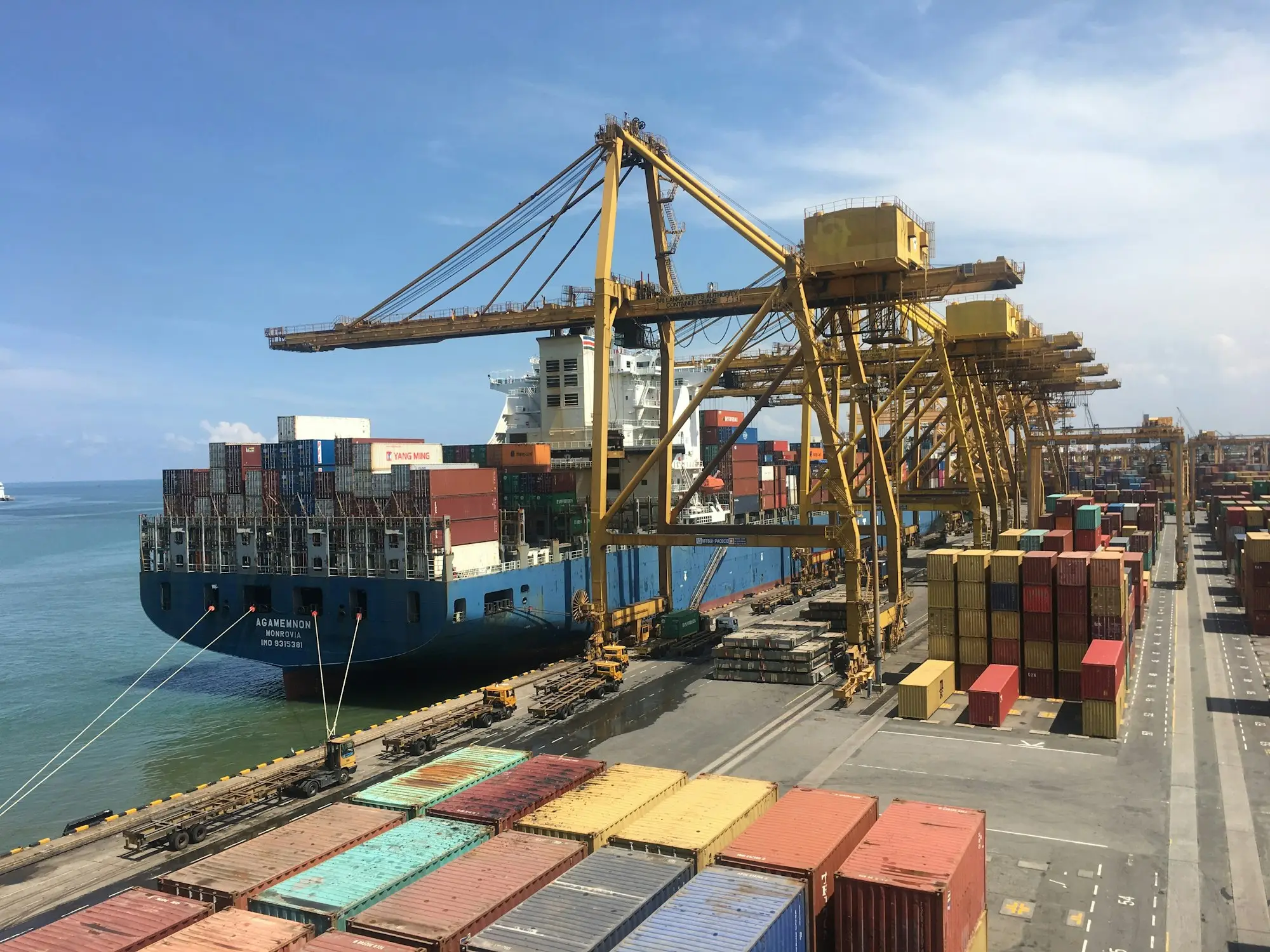
An overseas brand has offered you the Australian rights. It’s exciting, and the draft agreement probably has a clause near the back that turns the excitement into arithmetic: a minimum purchase commitment. Buy at least this much each year, or the exclusivity goes. Funding that commitment is less about the headline number and more about timing: when each shipment’s cash leaves, and when your customers’ cash comes back.
What does an exclusive distribution deal actually commit you to?
Exclusive rights are almost never free. In exchange for being the only appointed seller in a territory, the brand wants proof you’ll move volume. Typical obligations include:
- A minimum purchase commitment, set as a value or a number of units per contract year, sometimes split into quarters.
- An opening stock order big enough to supply your launch customers.
- Marketing or launch spend, sometimes a fixed amount and sometimes a percentage of purchases.
- Demo, sample or display stock for trade customers and showrooms.
- Service obligations, such as spare parts, warranty handling or a local warehouse.
The consequence of missing the minimum matters as much as the number. Common outcomes are losing exclusivity and becoming one distributor among several, paying a shortfall amount, or termination. Know which one you’re signing up to.
Why isn’t the annual minimum the amount you need to borrow?
A $480k annual commitment doesn’t mean you need $480k on day one. Purchases are spread across shipments, and from about the second shipment onward your customers’ payments start funding the next order. What you actually need to fund is the peak gap: the point in the year when the most cash has gone out on stock and the least has come back from sales.
For importers, the gap is long because cash leaves well before stock arrives:
| Stage | Cash out | Typical timing |
|---|---|---|
| Supplier deposit | Often 30% of order value | When the order is placed |
| Supplier balance | The remaining 70% | Before shipment, or against shipping documents |
| Freight and insurance | If your Incoterm makes it yours | Around shipment |
| Duty, broker and port charges | At customs clearance | On arrival |
| Import GST | 10% of the value of the taxable importation | Before release, unless deferred |
| Launch and marketing | Agreed budget | Before and after stock lands |
On the GST line, the ATO bases import GST on the value of the taxable importation. That’s the customs value plus duty, plus international transport and insurance if they aren’t already included. For a registered business it comes back as a credit, but only on your next BAS. The ATO’s deferred GST scheme lets eligible importers report it on the BAS instead of paying at the border, which takes a whole line out of the peak. See our deferred GST explainer for how that works.
Our import cash timeline tool plots these dates for a single shipment. For a distribution deal, run it for each committed shipment and overlay them.
A worked example: the first year of a distribution deal
Illustrative only. Invented business, rounded numbers.
A Melbourne homewares wholesaler signs as exclusive Australian distributor for a Scandinavian outdoor cookware brand. The agreement sets a year-one minimum of $480k at supplier prices, which the wholesaler plans as four quarterly shipments of $120k. Terms are 30% deposit with order and 70% before shipment, with about 10 weeks from order to arrival. Trade customers (independent retailers and two online stores) pay 60 days after delivery.
Per shipment, the landed costs look like this:
| Item | Amount |
|---|---|
| Supplier price | $120,000 |
| Freight and insurance | $8,000 |
| Duty (illustrative 5%) | $6,000 |
| Broker, port and cartage | $2,000 |
| Import GST (10% of $134,000) | $13,400 (claimed back on BAS) |
| Cash out per shipment | about $149,400 |
Now the timeline:
| Month | What happens | Running cash position |
|---|---|---|
| 0 | Shipment 1 deposit ($36k); launch marketing paid upfront ($40k) | −$76k |
| 2 | Shipment 1 balance paid | −$160k |
| 3 | Shipment 1 lands: freight, duty, broker, GST; shipment 2 deposit | −$225k |
| 4 | GST on shipment 1 recovered on BAS; first deliveries to retailers | −$212k |
| 5 | Shipment 2 balance paid | −$296k |
| 6 | Shipment 2 lands and is cleared (about $29k); first retailer payments arrive (about $35k) | −$290k and turning |
The peak is roughly $300k–$330k, depending on whether shipment 2’s clearance costs land before or after the first retailer payments. That’s well short of $480k, and it arrives around months five and six. After that, if sell-through holds, customer payments roughly carry the later shipments. The plan only works if the funding is ready for that early peak, and if there’s a buffer for a slow start or a weaker exchange rate.
If you’ve got a distribution agreement on the table and want to know how the first shipments could be funded, tell us about the deal. Asking won’t touch your credit file.
Which clauses change your funding need before you sign?
Your lawyer will read the agreement for legal risk. Read it again yourself for cash. These are the terms that move the peak:
- How the minimum is measured. Units or value? At ex-works, FOB or landed prices? A value minimum at FOB is very different from one measured at your selling price.
- The currency. If the minimum is set in the supplier’s currency, your dollar commitment floats. Customs value is converted at the ABF’s published exchange rate for the day of export, and your supplier payments convert at whatever your bank gives you on the day. Plan on a conservative rate. Our guide to exchange-rate timing covers the mechanics.
- Annual or quarterly. An annual minimum lets you start small and build. Quarterly minimums force spend at a steady pace, even before you’ve got customers.
- A ramp-up year. Many brands accept a lower first-year minimum for a new territory. Ask.
- Carry-forward. If you beat the minimum one year, can the excess count toward the next?
- Supplier price increases. If the brand can lift prices mid-term while the unit minimum stays fixed, your cash need rises without warning.
- Shortfall remedies and cure periods. A 90-day window to catch up is worth far more than it looks.
- Termination and stock buyback. If the deal ends, will the brand buy back unsold stock, and at what price?
On competition law, exclusive territories and minimum purchase terms are common in distribution. The ACCC’s exclusive dealing guidance explains when restrictions between suppliers and resellers can become a problem. Have your adviser confirm the agreement sits comfortably.
What can you negotiate with the brand itself?
The cheapest funding is the funding you don’t need. Before you look at finance, push on the supplier side:
- Lower deposits or longer balance terms once the relationship is established. Our guide to negotiating deposit and balance terms covers how importers approach this.
- Marketing support or co-op funds credited against purchases, rather than paid by you upfront.
- Demo and display stock on consignment or at a discount.
- Split shipments so the minimum is met with more frequent, smaller containers. That lowers the peak, though LCL freight costs more per unit.
- A shipment schedule matched to your trade customers’ buying seasons, not the factory’s production calendar.
How can finance carry the opening shipments?
Once you know the peak, choose a structure that matches its shape:
| Option | Suits | Watch for |
|---|---|---|
| Import line of credit | Recurring shipments; draw for each order, repay as customers pay | Size the limit to the peak plus a buffer, not to one shipment |
| Supplier deposit funding | Bridging the deposit and balance on the opening order | Repayment timing should match when the stock sells |
| Stock finance | The weeks between landing and selling | Slow sell-through stretches the term |
| Property-secured finance | Large commitments or newer businesses | Longer to arrange; property is at stake |
Unsecured, cash-flow and line-of-credit options for trading businesses typically run from $5,000 to $500,000, sized on turnover and bank statements. Property-secured business loans run from $20,000 to $5,000,000. When comparing, look at the estimated total cost of finance in dollars for your timeline and build it into your landed cost per unit.
What will a lender want to see?
A distribution deal is easier to fund when the story is clear. Have these ready:
- the signed or near-final distribution agreement, including the minimum and the territory
- recent business bank statements and turnover figures
- your shipment plan with supplier terms and expected arrival dates
- landed-cost estimates per shipment. Our landed cost calculator helps.
- evidence of demand, such as letters of intent, pre-orders, existing trade accounts or sales of similar lines
- details of any ATO debt or past credit issues, which are considered case by case
Exclusive rights are a big step. Make sure the cash is lined up behind them
Winning a brand’s Australian rights says you’re trusted to build a market. The commitment that comes with it is real, though, and the first year asks for the most cash before the sales catch up. We work with importers and distributors on exactly this: deposits, balances, duty and GST, and the gap until trade customers pay.
The enquiry takes about a minute. Asking what’s possible won’t leave a mark on your credit score, because no credit check happens at the enquiry stage. Your details aren’t passed around a list of lenders, so your phone won’t start ringing with strangers. One real person reads your enquiry, looks at the agreement and shipment plan you describe, and calls you to talk it through. Please fill in the form accurately, with your actual turnover, the size of the commitment and when the first deposit is due, so we can match the right option first time.
Frequently asked questions
What is a minimum purchase commitment in a distribution agreement?
It's a promise to buy at least a set value or quantity of the brand's products in each period, often each contract year. It's the price of exclusivity. The agreement usually says what happens if you fall short, commonly losing exclusive rights, a shortfall payment or termination.
Can I get a business loan to meet a distributor's minimum order?
Yes, it's a business purpose. Lenders will want to see the distribution agreement, your turnover and bank statements, and a sensible plan for selling the stock. Unsecured and line-of-credit options typically run from $5,000 to $500,000, sized on turnover and bank statements. Larger commitments can be secured against residential or commercial property from $20,000 to $5,000,000.
Should I borrow the whole annual minimum upfront?
Usually not. Shipments are spread across the year and early sales help pay for later orders. Map the timeline, find the month when the most cash is out and the least has come back, and size funding to that peak. A revolving line of credit suits this because you draw for each shipment and repay as customers pay.
Does the exchange rate affect my minimum commitment?
If the minimum is set in the supplier's currency, yes. The commitment stays fixed in their currency, but what it costs you in dollars moves with the exchange rate. Cost your year-one plan on a conservative rate so a weaker dollar doesn't blow out your funding need.
What happens if I miss the minimum purchase target?
It depends entirely on the agreement. Some brands convert you to a non-exclusive distributor, some charge a shortfall amount and some can terminate. Read the shortfall clause closely before signing, and try to negotiate a cure period or a carry-forward of excess purchases from earlier periods.
Can a new importing business become an exclusive distributor?
Brands do appoint newer businesses, especially for a first entry into Australia, but they'll want confidence you can fund the commitment. Lenders will look closely at trading history, so a newer business may need a smaller opening commitment, a ramp-up year or property security to fund the first orders.